
Although many Strength and Conditioning (S&C) coaches will work within a larger organisation and focus solely on small group networks such as their sports team and perhaps wider supporting network, there will be many that look to create their own sports organisation that follows their ideology and sporting goals.
Such coaches are found widespread in amateur and individual sports such as Powerlifting, Weightlifting, Boxing, Crossfit, Martial Arts and Wrestling where there is either a recent growth in popularity of the sport or the sport is used to facilitate growth and social development in low economic areas.
In these circumstances, the S&C coach is not only faced with requiring the skills to develop athletes and teams in the ethos of the scientific method they also require business acumen to enable sustainable development of the club.
This essay aims to layout some of the basic principles of organisational structures that are most pertinent to an amateur or start up sports club and what challenges the S&C and managing team may face enabling them for sustainability.
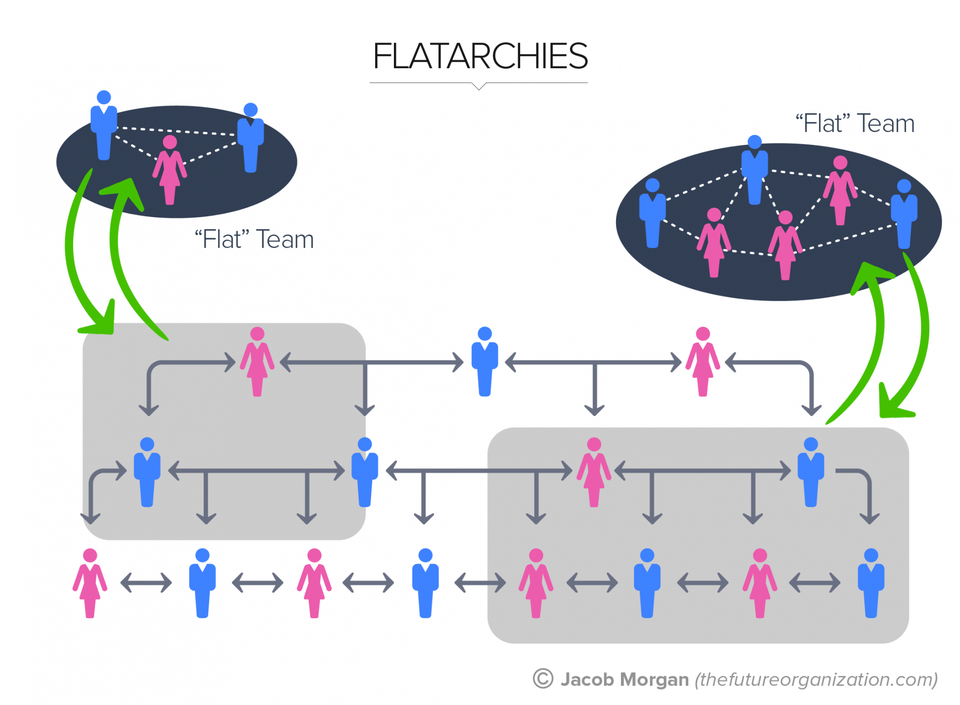
Morgan (3) describes five main structures an organisation can form
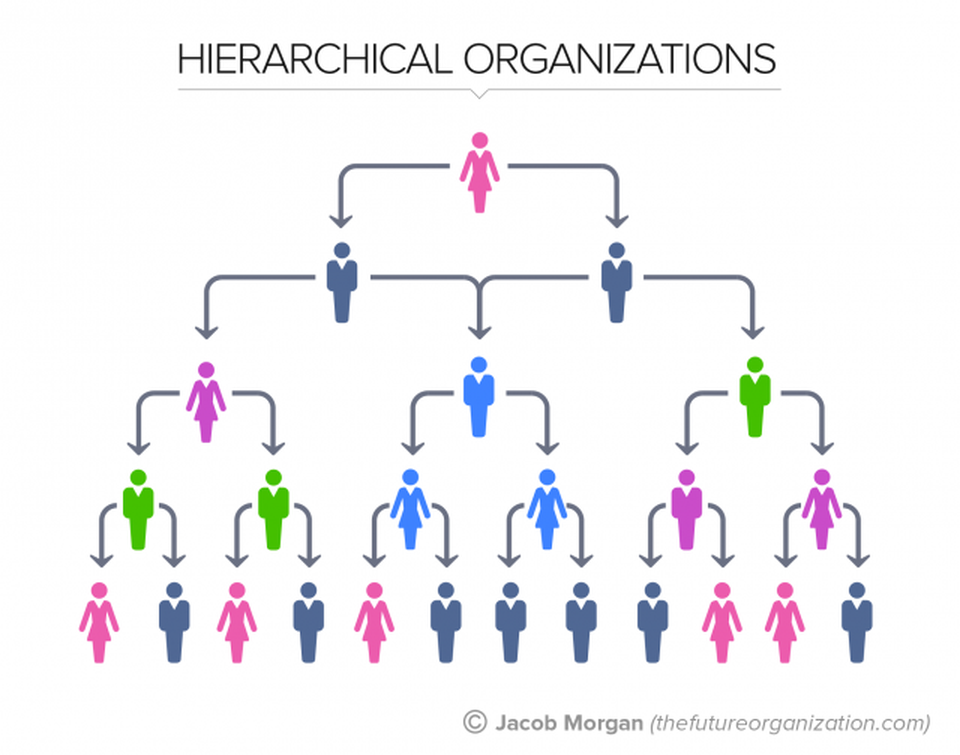
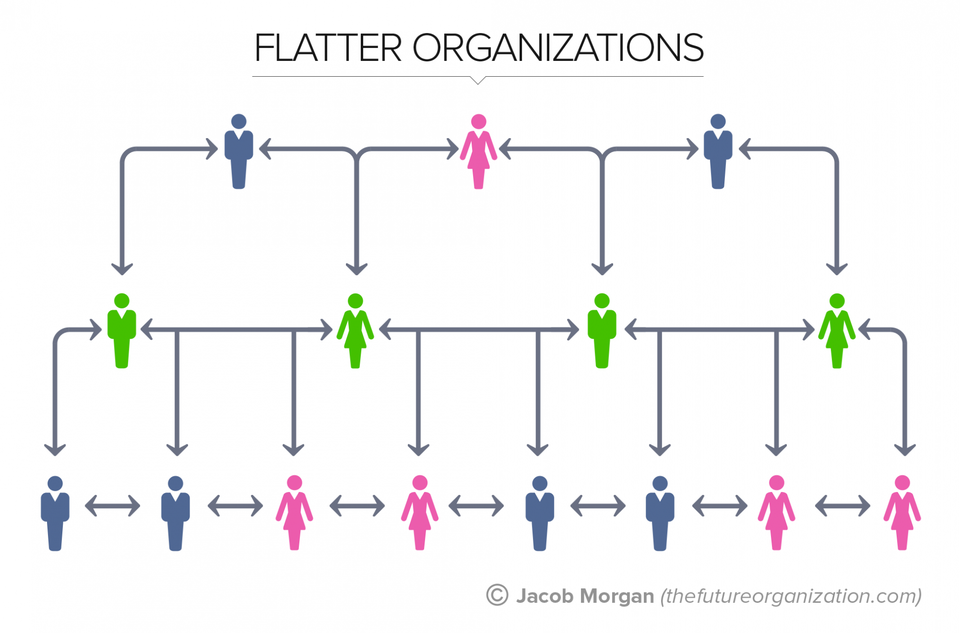

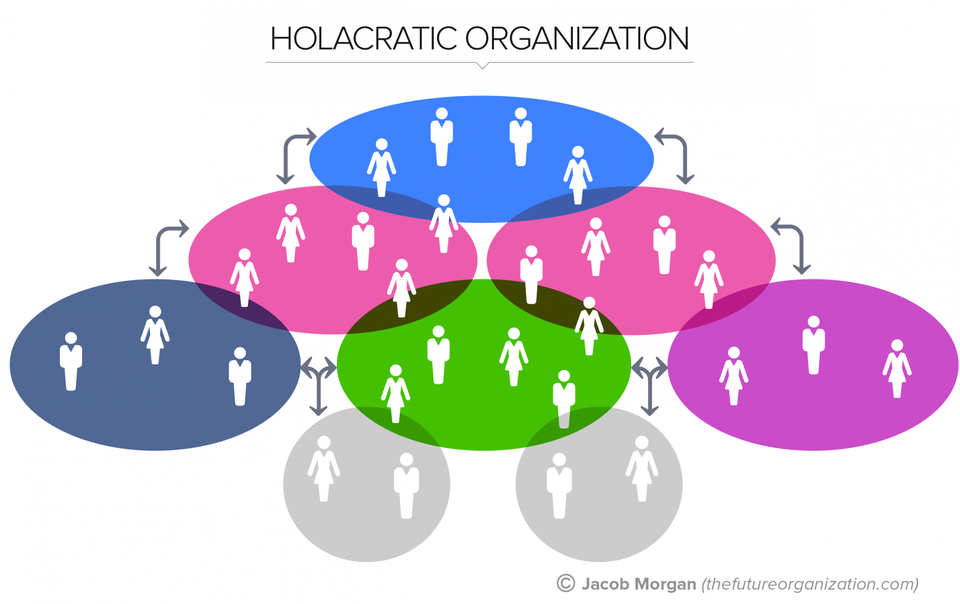
Many amateur sports organisations will start up using the flatter organisation (FL) in which there are three figure heads otherwise known as your committee; Chair, Secretary and Treasurer with perhaps a small team of volunteers supporting them. This due to the legal framework sought after by UK Sport and HMRC in how small, not-for-profit, organisations are to be structured.
Quite often, a club will start up as an unincorporated organisation as this does not require registering with HMRC or filing tax returns and has simple and flexible administration as the unincorporated organisation is able to create and amend the rules by which it is governed (as long as they are lawful) to suit the administration and development of the club.
Incorporated organisations have a more rigid legal framework and can take on several different forms, however, they provide safety for the committee members as they are a separate legal entity. For the purposes of this article we will be focusing on unincorporated organisations as that’s how amateur sports club begin and stay as for many years, before growing enough to warrant change.
Once the organisation is formed it will then need governing rules or ‘constitution’ which will form the basis of how the organisation will run and the rules it will abide by, often linking in with the constitution of the sport’s National Governing Body. Thus far, the organisation is very structured and ordered, following rules of governance and led by a small group of leaders who are establishing the structure and direction of the group, akin to the Flatter organisation.
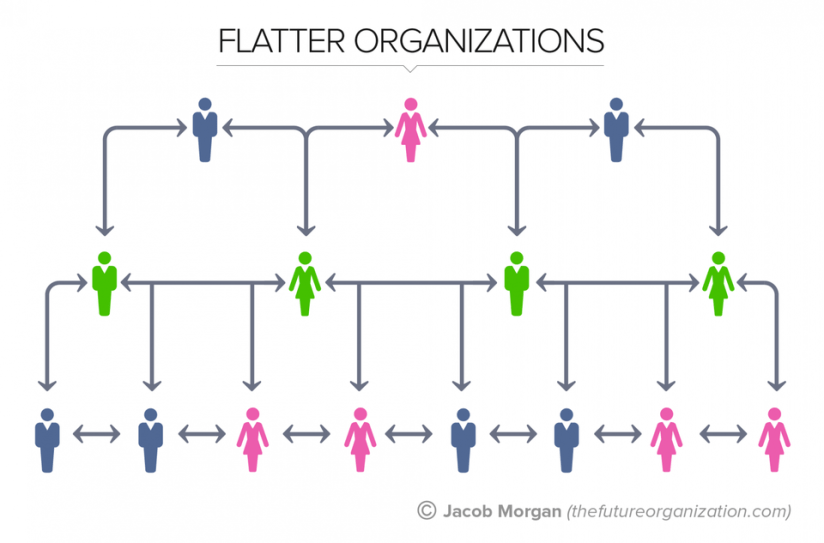
As the club grows, in participants of the sport and volunteers, the leaders will find they have a lot of passionate enthusiastic people looking to support and develop the organisation which will also require focus on organisational development theory. According to Morgan (2) this is when your organisation may act like an ‘organism’; grabbing what work it can, offering services to whoever will take them and going in many uncoordinated directions.
At this vital initial stage, it is important the club learns what its skills are, what the local demand is, and how to build on this information to find combability between itself and the local environment within which it looks to thrive.
If this type of organisational development continues, the cohesion found in most organisations will be lost as individuals continue to follow their own path and lose sight of the clubs vision, the organisations main aim. This can eventually lead to dissolution of the original organisation and several separate entities being started by the individuals who had originally participated in the growth of the club.
The subsequent organisational development from G. Morgan (2) shows the organisation as a brain, taking in information about the local environment within which it sits and developing strategies to survive and grow.
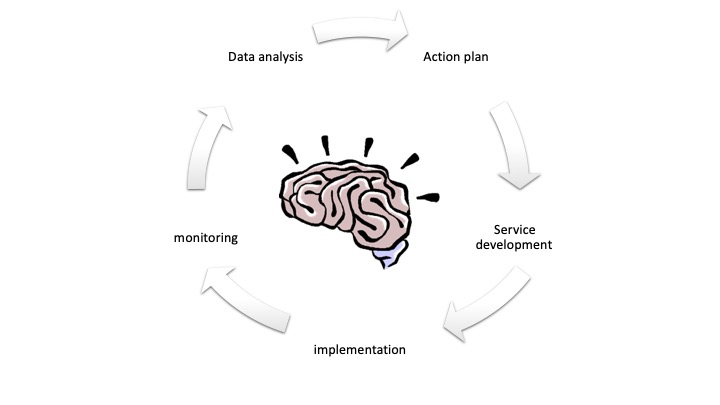
For a local sports team, this would include focusing on data that has been collated during the organism phase such as the outreach projects that have been undertaken, which were most successful and why, the population of the membership of the club and how that population is made up. For example, where did these members come from; local advertising, open days, taster session held at local events, schools’ clubs, from sporting events you attended as a club. Data could also include what funding is being focused on this year, what the goal from the National Governing Body or Sport England is for this term, which means a focus on a certain demographic. Providing services to support the goals of the funding groups will enable the club to develop in size and support from essential groups.
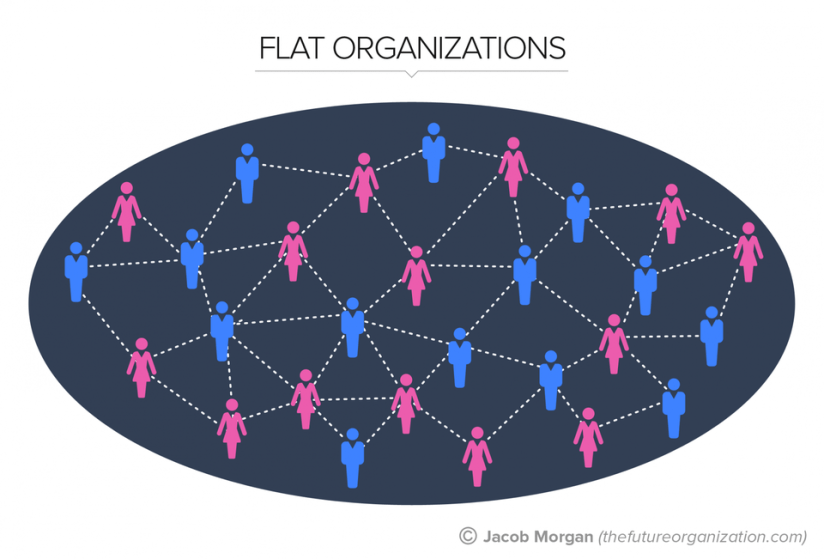
Once this ‘brain’ is in place, the organisation may take on another of J. Morgan (3) structures; the flat structure (FT). This is where each element of the club is working in harmony with the other, no one needs leadership as they are all dedicated to the goal of the club and understand their skill set and role within it, they dedicate suitable time needed for growth and share workloads depending on the balance of demands at the time. This structure may change from time to time when change is needed and return to the FL is required.
The intelligent brain organisation will also look at elements of social theory to ensure it remains evolving and driven towards the clubs vision of success, such as Kotter’s (1) 8 step change journey model:
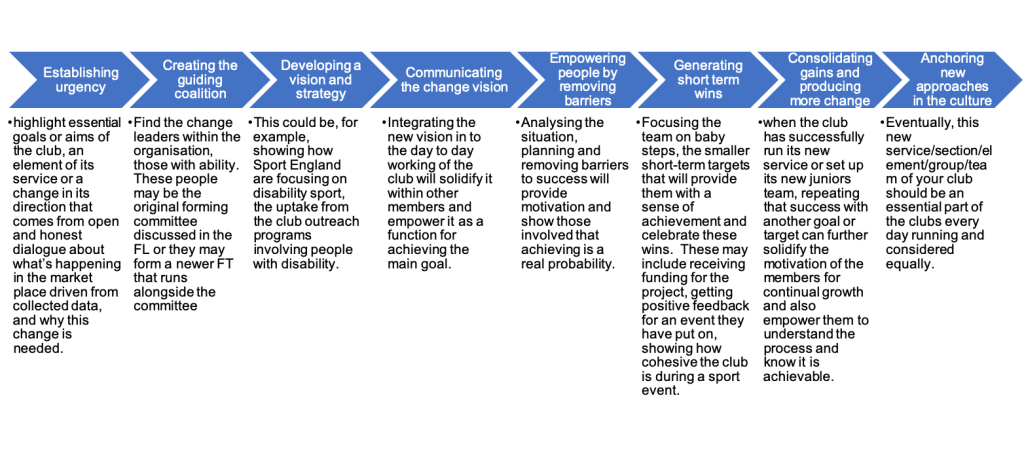
Ignoring any element of each process; how the structure will change and develop, what stages of motivation the team is in, hampering progress because of a focus on a past or future element of the club, will lead to abandonment of the team by the volunteers leading to failure of the club. Amateur sports team’s are motivated by passion, as opposed to finance, which means the method of motivating has to focus building on their passion and supporting their motivation.
Many of the principles of organisation and motivation will have been experienced by the S&C coach within the sporting realm as developing a sports team or an athlete is akin to developing a business organisation and motivating people often requires the same skills not matter if the end goal is financially or sporting based.
Once thing runs true amongst all, as long as the person developing the team is aware of how to successfully grow and what pitfalls lie ahead, the chance of success is far greater.
 South West Strength and Conditioning